How to Become a Registered Dietitian (RD) in Manitoba:
An Immigrant’s Journey
Kristine D.
If you are a Registered Nutritionist-Dietitian (RND) from the Philippines and would like to pursue being a Registered Dietitian (RD) here in Manitoba, this article may help you find your way. It is by no means the only route to follow, but it is one that tells an immigrant’s personal journey – How long did it take her? What could she have done better? What resources were available at her disposal? Read on and you might pick up some good information which you may use on your own journey towards becoming an RD.
—–
I migrated to Canada in March 2009 to join my husband who has been a permanent resident here in Manitoba since 2007. When I left the Philippines, I was not sure how to rebuild my career as a Dietitian. I know it could be tough – I might be required to take additional courses; there might be an examination to take; I might not even be qualified. Like most immigrants, I did not know where to start. I was even prepared not to practice my profession altogether because quite frankly, I did not know any detail of how to do it. The thought of having “just a regular job” did not sound so bad at all, too. There was a point when I was already thinking I would settle and be happy if I become a Barista here (which incidentally was not that of a “cool” job here as it is in the Philippines).
After the first couple of weeks of familiarizing myself with my new environment and doing practically nothing at home though, I finally decided to look up in the internet how to become and Dietitian here in Winnipeg. As I searched and discovered a whole lot of information in cyberspace, I thought, “This is doable. It may be a long shot, but it is definitely worth the try.” Needless to say, that triggered me to get off the couch and start working on my accreditation. Along with it came a renewed sense of longing for the profession I thought I already lost when I migrated. That longing fuelled my journey, and made me counter the fear and sense of uncertainty I have unreasonably felt as a newly-landed immigrant.
The first and perhaps most important information I discovered was, like in the Philippines, Dietetics is a regulated profession here in Manitoba. Below are some helpful additional pointers:
The College of Dietitians of Manitoba (CDM) is the regulating body within the province for the practice of Dietetics. Its primary goal is to regulate the profession through the Registered Dietitians Act of Manitoba and to ensure the protection of the public. It establishes the scope of practice, determines education standards and ensures the competency of its members.
The titles Registered Dietitian, Dietitian, Graduate Dietitian, the designation RD and the ability to work in the capacity of a dietitian are all protected in Manitoba. Unless you are an approved member of CDM, it is unlawful to use any of these titles until you have heard from the College regarding your application.
Here are the contact information for CDM:
College of Dietitians of Manitoba
36-1313 Border Street
Winnipeg, MB R3H 0X4
Telephone: (204) 694-0532 Fax: (204) 889-1755
Toll Free: 1-866-283-2823
[email protected]
Website: http://manitobadietitians.ca/home.aspx
Since the practice of Dietetics is regulated, the government provides financial assistance to new immigrants pursuing the profession. I got in touch with the Credentials Recognition Program Coordinator Sandra Simpson and she provided me with a financial aid of $2500. Please be informed that this amount will not be given in cash. How it works is that when you qualify for assistance, you reimburse recognition-related expenses as soon as you incur them, and you will receive cheques for each reimbursement until you reach $2500. The Credentials Recognition Program also offers work experience assistance. For more information about this program and to set up an appointment with the coordinator you may contact:
Manitoba Labour and Immigation
Immigration and Multiculturalism Division
5th Flr 213 Notre Dame Avenue
Winnipeg, Manitoba, Canada R3B 1N3
Tel: (204) 945-6300
Note: Book an appointment as early as possible because there is usually a 3-month waiting time in this Division.
Registering with the College: Steps that I Followed
1. Contacting CDM
After having known that the CDM is the regulating body for the practice of Dietetics here in Manitoba, I immediately got in touch with them (mid to late April 2009). The Registrar, Michelle Hagglund RD, has set an appointment to meet with me and requested that I bring all my credentials. I brought with me the following documents during our first meeting:
- Official Transcript of Records
- Diploma
- PRC Registration
- Detailed Resume (Not to be confused with the resume you submit when looking for a job, this resume would help the Board of Assessors gauge the knowledge/skills you have gained in the Philippines for evaluation purposes. The more detailed, the better. Mine consists of approximately 4 pages)
- All training certificates and employment records
It would help if you could bring other documents that the College will eventually require you anyway. If you do not have these prior to your appointment, immediately arrange for them because the Registrar will wait until all these are mailed in before she forwards your application to the Board of Assessors for evaluation (I did not have these documents with me during my first visit and as such, the processing of my academic credentials was delayed. I will explain these documents further in Step 2):
- Assessment of Equivalency of Nutrition Degree
- Detailed Syllabus of Courses Taken (available from your university)
- Completed Criminal Record Check
2. First Meeting: Application with the College
I sat down with Michelle and she explained that the application with the College involves a 3-tier approach: (1) Acadamic Evaluation (2) Internship/ Practical Experience Evaluation and (3) Writing the Canadian Dietetics Registration Examination (CDRE). She also said that the application process usually takes a long while, depending on the results of evaluations (i.e, will there be additional academic/ practical experience upgrading necessary? If so, how many credits? Remember that evaluations are done by the College’s Board of Assessors and that they follow a certain timeline, which may also affect the course of evaluation). As well, she said that all three tiers should be done consecutively and as such, one may not be allowed to do internship/ practical experience upgrading without first satisfying the academic requirements, and so on.
She likewise explained that evaluations are individualized such that my evaluation may be different from another RND from the Philippines, even if we were from the same country. In most cases, she said, the Bachelor of Science degree gained from the Philippines is only equivalent to 2nd year of University here, and that a Master of Science degree is actually the one equivalent to a Bachelor’s Degree in Nutrition.
Due to the long process involved with the registration, she suggested that I find a related job first so that I can have an idea of how to work here in Canada. She mentioned about becoming a Diet Clerk at the Health Sciences Centre.
After having explained the process of the application, Michelle gave me an application form to fill out. The International Application Package she has let me furnish is also available on their website. You will be able to access the package if you click here. It will be wise if you print and fill out the application form before you come to see her, as it will give you ample time to work on the form (it is about your academic background, practical training, work experiences and continuing education. Thinking about dates and other information may take a while, that is why I suggest you do this beforehand. I also suggest you pay really good attention into doing your detailed resume, because you can use it as a guide in answering this form).
While I was filling out the form, Michelle photocopied all of my credentials. Afterwards, she gave me back the original copies and retained one copy in her file, together with my application. She also gave me a notarized (dry-sealed) copy to signify that I have met with the College and that my application is in progress. I then paid the Academic Credential Fee of $100.00.
Before I left, Michelle gave me a list of documents that are still lacking in my application for Tier 1 – Academic Evaluation. These were:
- Assessment of Equivalency of Nutrition Degree done by a Comparative Education Service institution. She suggested two institutions to get this service from – World Education Services (WES) and Comparative Education Service – University of Toronto. I chose to go to WES as they evaluate faster. For detailed information about their services, click here. (Note: I applied for a course-by course analysis. This has cost me around $200 but I felt it was worth it not only because it was a requirement but also because I finally knew what my credentials are worth here in Canada);
- Detailed syllabus of courses taken. In my university this is called Course Description. I immediately made arrangements with a friend in the Philippines to request this on my behalf and send to me as soon as possible. (My Course Description has a total of 8 pages);
- Criminal Record Check. It will be wise to apply for this as soon as possible after your arrival in Canada, as this may take 6-8 weeks and the College will not process your papers for Tier 1 if this is not in.1. Academic Evaluation: Completing the Requirements and Getting the ResultsIt took me around three months to complete all the requirements for Tier 1 of the application, largely because of the documents which needed to be requested from my university. Hindsight, if I had only known what I needed before I migrated, I could have worked on those requirements before I left the Philippines and I could have saved a lot of time by doing so.It took the College another three months to evaluate all the documents I submitted and finally, on October 2009, they sent me a letter indicating the results of Tier 1 – academic evaluation. The Board of Assessors requested that I take three courses for academic upgrading/ updating. These courses are to be taken at the Faculty of Human Ecology, University of Manitoba (U of M. There is no other College/ University that offers Nutrition courses here in Manitoba). Each course is equivalent to three credit hours for a total of nine credits (9 units, if you translate in the Philippine education system).2. Academic Upgrading
I enrolled in two of the three courses the Board of Assessors required me to take in the Winter Term of 2010 (January to March). The other course was seasonal and was only offered in the Fall Term. Note that before I got accepted to enrol in those courses, I needed to apply as a Special Student at the Faculty of Human Ecology. One of the requirements was that I take a language examination, which will determine if my English is sufficient for university. There were a lot of English language exams available out there, but I opted to take TOEFL ibt because there was an examination schedule that fitted my timeframe in completing the requirements for application as a Special Student. To learn more about TOEFL, click here. To learn how to become a Special Student at U of M, click here.
It was a great experience going back to school. I felt like I was finally learning food and nutrition concepts in the Canadian setting. The professors I had were very supportive especially when they learned about my background. Perhaps because I was really interested and I had sufficient background on those courses, I finished the term with an A+ on both. Not bad, I thought, for a newly-landed immigrant who has an almost full time job (I got hired as a Dietetic Technician at the Health Sciences Centre on November 2009).
Towards the end of Winter Term 2010, I learned that the other course I needed to take will not be offered until the next Winter Term because the only professor teaching the course will be on sabbatical leave. My only other option was to take an equivalent online course with the University of Alberta (U of A) for the upcoming Spring Term, (which will start less than three weeks!) or else my academic upgrading will be a year delayed.
Because I did not want to wait another year in order to get done with my academics, I applied right away as an Open Studies student with U of A online. They have almost the same requirements as U of M like the language proficiency score (I just ordered another copy and had it delivered to them), but I found that they were more strict in determining if I had the right prerequisites for the course (i.e., Nutri 468 – Clinical Nutrition – Distance Delivery). Aside from my transcript and the letter from the Board of Assessors of CDM, I needed to also furnish them a copy of my Course Description. After their assessment and with merely a day to go before the end of the registration period, they have finally let me enrol to the course (Whew!).
Getting into U of A was tough, but finishing the course was definitely tougher! Within a matter of 6 weeks, we had: 10 modules, 5 cases studies, 5 participatory group works, 8 quizzes and 2 examinations. These, topped with an online mode of delivery, made it one of the toughest courses I have ever taken in my life. The minimum grade that the CDM required of me was 70% (C) in all courses, but after the midterms I felt that I would not even get 50%. Luckily I recovered in the finals and finished at 79% (B), making the cut. To learn more about Nutri 468 – Clinical Nutrition – Distance Delivery, click here.
3. Academic Upgrading: Submitting My Marks and Getting the Evaluation Results
After the long and tough Winter and Spring Terms I had, I submitted my marks to CDM (July 2010) and waited once again for their re-evaluation. They needed to certify that I already have completed the academic requirements they asked of me before they move on Tier 2 – Internship/ Practical Experience Evaluation. It took them another couple of months to revisit my academic credentials and in September 2010, I got their letter saying that the Board of Assessors already considers my academic requirements complete. It was a sweet day for me and my husband, Jeffrey, who has been with me since Day 1. I remember thinking, “Hard work is slowly paying off, I am almost halfway there.” I also remember how proud I felt as I attached the letters BSc (Bachelor of Science) to my name in my work email the day after. It was a sweet, sweet day indeed.
Within the same letter it was also mentioned that the Board of Assessors is requiring me to undergo a 15-week practicum, which I will discuss in the next step.
4. Tier 2: Internship/ Practical Experience Evaluation
While I was enrolled in the University, the CDM requested from me a list of Competencies Achieved During Integrated Practicum in the Philippines. Unlike our curriculum in the Philippines, internship here in Manitoba and anywhere in Canada is a separate entity from the baccalaureate degree. It usually takes around 40-45 weeks (almost 1 year) and is roughly equivalent to 1400 hours. Not all Nutrition graduates here qualify for internship. There is a tough selection process where marks, character and volunteer work are evaluated, among others. Only 15-20% of graduating students end up qualifying as an intern. In the end, only those who will successfully pass the internship will move on to the 3rd Tier – taking the Canadian Dietetic Registration Examination.
Based on the Competencies I have given them prior to finishing Tier 1 – Academic Evaluation, the Board of Assessors found that I still need 15 weeks of Planned Practicum Experience, and required me to undergo such. To view the Dietitians of Canada’s list of Competencies for Entry-Level Dietitian, click here. My Planned Experience Practicum is currently being prepared by the Manitoba Partnership Program, and the CDM made all the arrangements for it. The program costs me $2600 but there are additional costs as well, such as the practice insurance fee of $180. As of this writing, I am eagerly looking forward to my Practicum, which tentatively starts April 26 of this year. I am hoping to write the CDRE on November to become a full-pledged RD.
In summary, two years after I arrived in Canada, I already have finished my academic upgrading and am now anticipating my Practicum. On the side I am working as a Dietetic Technician, which also provides me with pertinent insights on food and nutrition concepts and the practice of the profession here in Canada. It is a long and tough journey, but I am confident that I will make it. To me there’s simply no turning back and I will not settle for anything less than a professional designation.
I encourage every RND from the Philippines to pursue getting accredited here. It will take a while, but every effort will all pay off in the end. I am certain that with the right attitude, perseverance and with God’s grace, we can make it in here Manitoba too.
—–
Kristine holds a Bachelor of Science degree in Community Nutrition from the University of the Philippines-Diliman. She has been a Registered Nutritionist-Dietitian in the Philippines since 2004 before she moved to Canada in April 2009. Back home, she has been employed with the University of the Philippines Center for Integrative and Development Studies (Research Assistant), PepsiCo International (Quality Assurance) and Nestle Philippines (Infant and Health Care Nutrition Marketing). She also has been featured as a guest Nutritionist-Dietitian in Sweet Life with Lucy, a magazine show which aired in QTV 11. She is currently a Dietetic Technician at the Health Sciences Centre in Winnipeg and will pursue her Planned Experience Practicum in April 2011. She hopes to write the Canadian Dietetic Registration Examination in November 2011 and finally become a Registered Dietitian in Manitoba.
[1] College of Dietitians of Manitoba website, http://manitobadietitians.ca/home.aspx
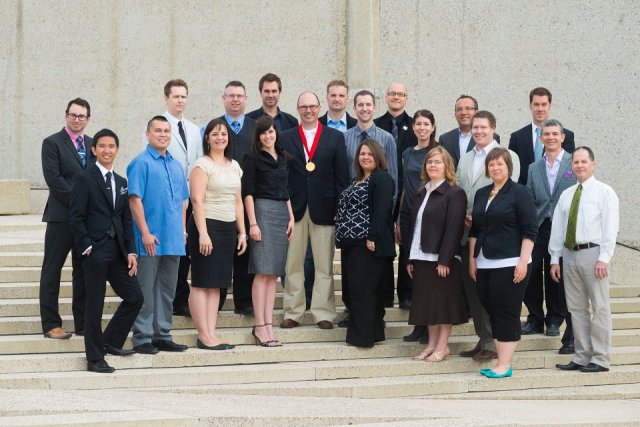




 opportunity to pass, the Membership Committee organized a trip to the Narcisse Snake Dens located at Narcisse, Manitoba last April 29, 2012.