Category: Career and Professional Development

  • Lifelong Seminar 1: Ways To Increase Engagement And Repeat Volunteerism

    Lifelong Seminar 1: Ways To Increase Engagement And Repeat Volunteerism

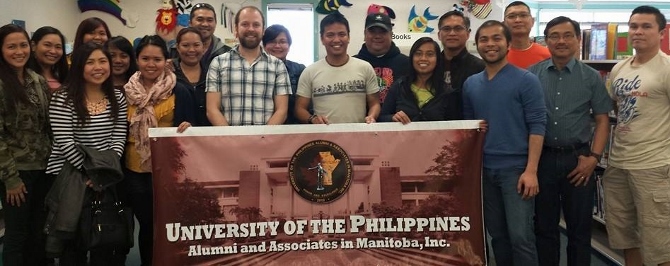
    Volunteerism is a huge part of the thrust of UPAA-MB as reflected in its annual activities of participating in various volunteer programs in Winnipeg. In line with this, the organization held a seminar about Organizational Development and Volunteer Management on March 14 at Sir William Stephenson Library. The guest speaker, Kevin Freedman, discussed key principles in managing the volunteer program of an organization.

    Kevin Freedman has been a volunteer himself for over 20 years for various organizations, activities, and initiatives. He received the Governor General’s Caring Canadian Award in April 2014. He also founded The Water Conservation Challenge. Currently, he is the President of University of Winnipeg Alumni Council and the Corporate Speaker of Canadian Blood Services. He is holding and had held various leadership positions in the community including being a member of the Board of Trustee in Winnipeg School Division and member of the Board of Directors of Assiniboine Credit Union among others.

    Mr. Freedman started the seminar by highlighting key facts about the profile of volunteers in Canada. He mentioned that according to studies, sports and social services draw the most volunteers. Statistics also shows that younger people are more likely to contribute their time doing volunteer activities and that higher income, education, and involvement with religious groups correlate to volunteerism.

    He discussed a case study about how New York Cares, a leading volunteer organization in New York City, was able to increase activation rates, increase engagement and repeat volunteerism, and create new leaders. Mr. Freedman also talked about the 13 Steps to Driving Recruitment, Engagement, and Leadership by Nancy Schwartz, publisher of Getting Attention e-update and blog. The original article is found here. According to the publisher, organizations may use these principles to improve volunteer recruitment, engagement, and retention rates.

    The guest speaker emphasized the importance of training the volunteers properly, using targeted interactive communications to engage volunteers, and having feedback loops in nurturing an effective organizational volunteer program. To build an effective volunteer program, the organization must take into account the factors that draw, keep, increase, and drive-away volunteers.

    This year, UPAA-MB will be organizing series of Lifelong Learning Seminars as part of the objective to enrich the skills and knowledge of its members. The second seminar will be held in July.

    By Jeremy Malana and Nikki Mailom

  • The pathway to being a professional agrologist in Manitoba

    This article features the journey of two Filipino immigrants who studied agriculture at the same university and crossed each other’s paths as they pursued their dream to become Professional Agrologists in Manitoba. It tells about their unique experiences, the challenges and opportunities that came their way and their desire to make a difference in their chosen profession and in their new home province.

    By: Ramon Faustino M. Sales, Jr.


    The past decade has witnessed an increasing influx of immigrants from the Philippines and other countries who have resettled in Manitoba to seek a better quality of life. Many of them are professionals from various fields of expertise. Having a vibrant and fast-evolving agriculture industry, Manitoba offers plentiful opportunities for agrologists (or agriculturists as they are called in the Philippines) and other workers serving in this sector.


    Among these foreign-educated Agrologists, Paulo Fabian and Jennifer Esquibel-Merin had, even before coming to Manitoba, set their sights on building a career in their field of study in their new home province.  However, just like many other new immigrants in Manitoba, both of them were ready to take on transition jobs, while exploring opportunities to practice their profession.


    A native of Sta. Maria, Bulacan, Paulo finished his Bachelor of Science degree in Agriculture, major in Horticulture, in 2002 at the University of the Philippines-Los Banos (UPLB). Prior to migrating to Winnipeg, Manitoba in 2008, he had worked for about four years in the private sector, three years of which dealt with veterinary product sales and landscape nursery establishment.


    In Manitoba, Paulo first attended a pre-employment training program at Employment Solutions for Immigrant Youth, an agency that helps equip the youth with useful tools to find and keep job opportunities. Through this agency, he got a part-time job at a call centre and also obtained information about the agrology profession in Manitoba.


    Jennifer, who hails from Liliw, Laguna, graduated with a  Bachelor of Science degree in Agricultural Economics in 2005 also at  UPLB. She could have opted to build a promising career at the Philippine government’s Department of Agriculture where she worked as a Project Development Officer for over two years, but fate had something else in store for her. Just like Paulo, when she arrived in Winnipeg in 2009, she took on jobs at Staples and Arts and Crafts, while actively seeking to get her credentials assessed and recognized.


    Getting past the first hurdle


    Had it not been for their common desire to practise their profession in Manitoba, Paulo and Jennifer would not have crossed each other’s paths.  They both knew at the outset that the practice of the agrology profession in Manitoba is regulated by the Manitoba Institute of Agrologists (MIA) as enshrined in Manitoba’s Agrology Act.


    Not too long after they submitted their professional certification application, Paulo and Jennifer got their much-awaited response from MIA informing them of their acceptance to a professional program for agrologists. In Manitoba, agrologists are trained and qualified to provide advice to production, processing and marketing of agricultural products, crops and/or livestock.


    As outlined by MIA, the process for Professional Agrologist designation consists of five steps:

    Step 1:  Submission of application form for registration with reference letter from a professional

    and payment of required fees

    Step 2:  Preliminary review of application by MIA. This process includes the review of application

    by the World Education Services (WES) which is based in Ontario.

    Step 3:  Assessment of application by the Admission and Registration Committee (ARC)

    Step 4:  Decision on the application by ARC. If the application is approved, the applicant is then

    registered as Agrologist-In-Training (AIT)

    Step 5:  Fulfillment of requirements to gain full status as Professional Agrologist (P.Ag.) or

    Technical Agrologist (Tech. Ag.)

    (More information can be obtained at this link: http://mia.mb.ca/process_overview.aspx )


    The IEAP Program


    The Internationally-Educated Agrologists Program (IEAP) is a skill-bridging program tailored for foreign –trained agrologists to enable them to integrate into the Manitoba agriculture sector, through a one-year program of coursework and work experience.  It assists new Manitobans with a degree in agriculture in finding relevant work that matches with their skills and experience, while helping Manitoba’s agriculture industry search for new talent.


    Eight-month Course Work


    Under the IEAP program, the participants, who are registered as Agrologists-In –Training (AIT) upon acceptance to the program, are expected to demonstrate and confirm their technical and professional competencies in the Canadian context. The program coursework consists of 8-9 subjects related to the participants’ areas of knowledge and expertise and cover Canadian agricultural business, agricultural science, and production and management practices. The participants are enrolled in courses in the Faculty of Agricultural and Food sciences at the University of Manitoba.


    In addition, participants take up a “Business and Technical Communication” course to enhance their communication and language skills and the “Practising the Profession of Agrology” course to equip them with the know-how about the agriculture industry and the responsibilities of a practising agrologist.

    The IEAP course work runs annually between August and April of the following year. (To obtain more information about the IEA Program, follow this link: http://iep.mia.mb.ca/start-here/the-system/)


    The first five batches of this program benefited from the full funding support provided by the Manitoba Labour and Immigration, which included a monthly allowance for participants during the entire course work.  Program participants came from different countries such as Nigeria, Kenya, Sri Lanka, Eritrea and the Philippines.


    Paulo and Jennifer belonged to the second (2008) and fourth (2010) batches of the program, respectively. Interesting as it was, the program not only allowed the participants to share technical know-how but also to promote meaningful cultural exchanges among them.


    Four-month Cooperative Work Experience


    Upon satisfactory completion of the coursework, the IEAP participants are required to undertake a four-month cooperative (or co-op) work experience to allow them to apply their newly- acquired knowledge and skills in a Manitoba agricultural firm, which many employers look for. The participants have to identify and explore possibilities with any firm for a paid work placement, which takes place from May to August.


    In May 2009, Paulo got placed at the Ian N. Morrison Research Centre in the University of Manitoba in Carman, which he completed in September of that same year. To Paulo, his practicum work proved to be enriching as he honed his skills in conducting interviews with researchers and farmers and from recording field trials of new crop varieties and technologies, including driving a tractor, calibrating equipment, and mixing chemicals, among others. At the end of the co-op work, he put together a written report describing the methods, outcomes and the learning experiences he gained from it.


    For Jennifer, it was a great feeling to have been accepted at MIA to provide human resource assistance to its Admission and Registration Committee in the review and processing of registration applications for the agrology profession. Little did she know that this practicum work would someday serve her well in her present job.


    As they finished the co-op work, Paulo and Jennifer were well on their way to Professional Agrologist status.


    To obtain a full professional status, Agrologists-In-Training need to fulfill additional requirements set by MIA as part of continuing professional development. These include attendance to the MIA annual general meeting and the MIA Professionalism and Ethics seminar. A total of 20 professional credits is needed to meet such requirements, and a whole day seminar is equivalent to 4 credit points. As well, they need to participate in the certification and mentorship process, and pay the required fees. (Additional  information on the requirements can be obtained at this link: http://mia.mb.ca/requirements.aspx)


    Having successfully completed their one-year program in 2009 and 2012, respectively, Paulo and Jennifer had been granted by MIA their license to practice as Professional Agrologists in Manitoba.


    Some Challenges


    Both Paulo and Jennifer consider themselves fortunate, having finished the IEAP program with full financial support from the provincial government.


    Although a modest stipend was provided throughout the coursework, some foreign-trained agrologists are hesitant to take advantage of the opportunity, thinking that it would be a big risk giving up their current jobs.   For Paulo and Jennifer, getting into the program was well worth the risk.


    Getting a 4-month work placement proved to be a challenge for some participants. In Jennifer’s case, it took her two months to find an agricultural company to work with, which caused some delay in completing her program. Getting the right fit between the participant’s area of expertise and interest and the agricultural company’s need was a major consideration.


    Recently, however, some changes have been made to the program. Unlike in the previous years, IEAP incoming program participants will now have to cover their tuition fees and related costs up to $5,500.00, depending on the number of courses. However, they may be referred to potential sources of financial assistance.


    Practising Professional Agrologists


    Shortly after becoming a Professional Agrologist in 2009, Paulo got hired for a six month full-time job as a laboratory technician at the University of Manitoba Soil Science Department. His work involved the weekly collection of soil samples with animal manure that were analyzed to determine their chemical composition and their potential effects on the environment.


    In June 2011, with the assistance of the Career Gateway Program of Manitoba Civil Service Commission, Paulo was employed as a Pesticide Assessment Officer by Manitoba Conservation. His work involved the provision of technical advice and assessment related to pesticide licensing and permits. Eight months later, Paulo got accepted at Manitoba Agriculture, Food and Rural Initiatives (MAFRI) to work as Acting Pesticide and Regulatory Specialist, based in Carman, Manitoba.  This time, he engaged farmers and rural municipalities to educate and train them on pesticides licensing.  As both jobs were term appointments, he juggled his government work with his second job at Air Canada, while seeking to balance work, family and life.


    Jennifer now works half a week at the MAFRI Livestock Section providing administrative assistance and the other half with MIA where she continues to perform the responsibilities assigned to her during her co-op work. An interesting job opportunity came knocking at her door one day, but she had to decline it with a heavy heart as the position was based outside Winnipeg. Had she accepted, she would have been far away from her parents and brother who had recently arrived and joined her in Winnipeg.


    For both of them, getting registered as Professional Agrologists has not only broadened their horizons, but also widened opportunities to meet potential employers looking for their newly-acquired expertise, and expanded their professional network.


    Beyond the IEAP program, Paulo and Jennifer have also shared interests in social-oriented pursuits. As regular members of the University of Philippines Alumni and Associates in Manitoba, Inc. (UPAA-MB, Inc.), they value the strong sense of camaraderie and purpose that binds its members towards improving the welfare of the Filipino community in Manitoba.


    Looking Ahead into the Future


    Paulo, now a doting father to a 2-year old daughter and also expecting a second child soon, and Jennifer, who recently tied the knot, look forward to a stable and fulfilling career in government service.  Both of them though are not closing the doors to the private sector where career development opportunities are equally rewarding. Buoyed by her recent success, Jennifer plans to take up a masteral degree program in the near future, but she is fervently wishing her husband in the Philippines  could join her soon so they could live and build a family together.


    As to their words of advice to aspiring Professional Agrologists, they candidly admitted that hard work, determination, focus and giving one’s best are key ingredients to achieving that goal. The path to a promising future may be long and filled with bumps, twists and turns, but for these two U.P. alumni, getting their full professional status is indeed a big step forward in the right direction.
  • UPAA-MB Congratulates Our Registered Architect, Dennis Flores

    UPAA-MB Congratulates Our Registered Architect, Dennis Flores

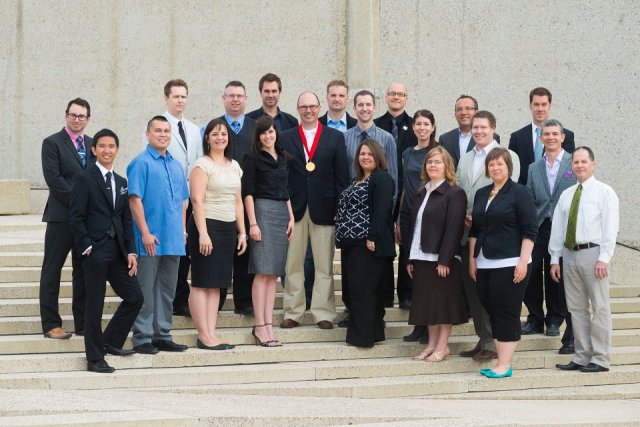
    UPAA-MB is committed to promoting professional development and educational advancement among our members and our community.  We would like to congratulate our very own Dennis Flores for achieving his professional designation as a Registered Architect and for becoming a Member of Manitoba Association of Architects.
     
    Dennis Flores with fellow members of Manitoba Association of Architects 2012. Photo courtesy of Winnipeg Free Press.
     
    Dennis has a Bachelor of Science degree in Architecture from the Philippines.  Before migrating to Winnipeg, he has worked around South East Asia and United States.  His experience included working on consultant and client sides of his profession.  At present, he is working on the construction side.
     
                           
                                                                  Our architect at work. Photos courtesy of Daryle Malchuk.
     

     1) When did you arrive in Winnipeg? How was your experience as a new immigrant?

     We arrived in August 2004.  As an optimist and coming from a land, where the people are resilient to adversity, it was easy for me adjusting to a new life in a place unlike home.  Winnipeg in general is a smaller, friendlier, safer and has a slower pace of life than in the Philippines.  The most challenging aspect for me in adjusting was looking for the job that I would really love.

    2) One of the challenges that new immigrants face is getting their first Canadian work experience and reference.  Can you share to us how did you get your first job? And was it related to your Philippine educational background or work experience?

     I remember calling all the architectural firms in the yellow pages and leaving them a voicemail expressing my willingness to work for them pro bono for 2 weeks, just to let them gauge my professional capacity.  I got a call back after 13 hours and got hired the following day.  I am fortunate to land my first job in Canada as an Architectural Technologist.

     3) What made you decide to pursue your professional designation?

     The challenge of getting it and the vision that I can accomplish it.

     4) What are the processes you have to go through in order to become a registered architect?  How long did it take?

     The first step was to get my academic credentials accredited by my profession’s corresponding accreditation body, which is the Canadian Architectural Certification Board (www.cacb.ca).  After getting certified, I had to apply as an intern member with the Manitoba Architects Association (www.mbarchitects.org).  Upon completion of the mandatory hours of experience, I was allowed to write the exams for the Architects Registration (www.exac.ca).

     It took me more than 7 years to become a registered architect.

     5)  What advice would you like to give other Filipino architects, who are planning to migrate to Winnipeg?

     Preparation.  More preparation always leads to better execution.  This is why I always encourage friends to start their career path while they’re still in the Philippines.


  • How to become a Registered Dietitian (RD) in Manitoba

    How to Become a Registered Dietitian (RD) in Manitoba:

    An Immigrant’s Journey

    Kristine D.


    If you are a Registered Nutritionist-Dietitian (RND) from the Philippines and would like to pursue being a Registered Dietitian (RD) here in Manitoba, this article may help you find your way. It is by no means the only route to follow, but it is one that tells an immigrant’s personal journey – How long did it take her? What could she have done better? What resources were available at her disposal? Read on and you might pick up some good information which you may use on your own journey towards becoming an RD.

    —–

    I migrated to Canada in March 2009 to join my husband who has been a permanent resident here in Manitoba since 2007. When I left the Philippines, I was not sure how to rebuild my career as a Dietitian. I know it could be tough – I might be required to take additional courses; there might be an examination to take; I might not even be qualified. Like most immigrants, I did not know where to start. I was even prepared not to practice my profession altogether because quite frankly, I did not know any detail of how to do it. The thought of having “just a regular job” did not sound so bad at all, too. There was a point when I was already thinking I would settle and be happy if I become a Barista here (which incidentally was not that of a “cool” job here as it is in the Philippines).

    After the first couple of weeks of familiarizing myself with my new environment and doing practically nothing at home though, I finally decided to look up in the internet how to become and Dietitian here in Winnipeg. As I searched and discovered a whole lot of information in cyberspace, I thought, “This is doable. It may be a long shot, but it is definitely worth the try.” Needless to say, that triggered me to get off the couch and start working on my accreditation. Along with it came a renewed sense of longing for the profession I thought I already lost when I migrated. That longing fuelled my journey, and made me counter the fear and sense of uncertainty I have unreasonably felt as a newly-landed immigrant.

    The first and perhaps most important information I discovered was, like in the Philippines, Dietetics is a regulated profession here in Manitoba. Below are some helpful additional pointers:

    The College of Dietitians of Manitoba (CDM) is the regulating body within the province for the practice of Dietetics. Its primary goal is to regulate the profession through the Registered Dietitians Act of Manitoba and to ensure the protection of the public. It establishes the scope of practice, determines education standards and ensures the competency of its members.

    The titles Registered Dietitian, Dietitian, Graduate Dietitian, the designation RD and the ability to work in the capacity of a dietitian are all protected in Manitoba. Unless you are an approved member of CDM, it is unlawful to use any of these titles until you have heard from the College regarding your application.

    Here are the contact information for CDM:

    College of Dietitians of Manitoba
    36-1313 Border Street
    Winnipeg, MB R3H 0X4

    Telephone: (204) 694-0532 Fax: (204) 889-1755
    Toll Free: 1-866-283-2823
    [email protected]

    Website: http://manitobadietitians.ca/home.aspx

    Since the practice of Dietetics is regulated, the government provides financial assistance to new immigrants pursuing the profession. I got in touch with the Credentials Recognition Program Coordinator Sandra Simpson and she provided me with a financial aid of $2500. Please be informed that this amount will not be given in cash. How it works is that when you qualify for assistance, you reimburse recognition-related expenses as soon as you incur them, and you will receive cheques for each reimbursement until you reach $2500. The Credentials Recognition Program also offers work experience assistance. For more information about this program and to set up an appointment with the coordinator you may contact:

    Manitoba Labour and Immigation

    Immigration and Multiculturalism Division

    5th Flr 213 Notre Dame Avenue

    Winnipeg, Manitoba, Canada R3B 1N3

    Tel: (204) 945-6300

    Note: Book an appointment as early as possible because there is usually a 3-month waiting time in this Division.

    Registering with the College: Steps that I Followed

    1. Contacting CDM

    After having known that the CDM is the regulating body for the practice of Dietetics here in Manitoba, I immediately got in touch with them (mid to late April 2009). The Registrar, Michelle Hagglund RD, has set an appointment to meet with me and requested that I bring all my credentials. I brought with me the following documents during our first meeting:

    • Official Transcript of Records
    • Diploma
    • PRC Registration
    • Detailed Resume (Not to be confused with the resume you submit when looking for a job, this resume would help the Board of Assessors gauge the knowledge/skills you have gained in the Philippines for evaluation purposes. The more detailed, the better. Mine consists of approximately 4 pages)
    • All training certificates and employment records

    It would help if you could bring other documents that the College will eventually require you anyway. If you do not have these prior to your appointment, immediately arrange for them because the Registrar will wait until all these are mailed in before she forwards your application to the Board of Assessors for evaluation (I did not have these documents with me during my first visit and as such, the processing of my academic credentials was delayed. I will explain these documents further in Step 2):

    • Assessment of Equivalency of Nutrition Degree
    • Detailed Syllabus of Courses Taken (available from your university)
    • Completed Criminal Record Check

    2. First Meeting: Application with the College

    I sat down with Michelle and she explained that the application with the College involves a 3-tier approach: (1) Acadamic Evaluation (2) Internship/ Practical Experience Evaluation and (3) Writing the Canadian Dietetics Registration Examination (CDRE). She also said that the application process usually takes a long while, depending on the results of evaluations (i.e, will there be additional academic/ practical experience upgrading necessary? If so, how many credits? Remember that evaluations are done by the College’s Board of Assessors and that they follow a certain timeline, which may also affect the course of evaluation). As well, she said that all three tiers should be done consecutively and as such, one may not be allowed to do internship/ practical experience upgrading without first satisfying the academic requirements, and so on.

    She likewise explained that evaluations are individualized such that my evaluation may be different from another RND from the Philippines, even if we were from the same country. In most cases, she said, the Bachelor of Science degree gained from the Philippines is only equivalent to 2nd year of University here, and that a Master of Science degree is actually the one equivalent to a Bachelor’s Degree in Nutrition.

    Due to the long process involved with the registration, she suggested that I find a related job first so that I can have an idea of how to work here in Canada. She mentioned about becoming a Diet Clerk at the Health Sciences Centre.

    After having explained the process of the application, Michelle gave me an application form to fill out. The International Application Package she has let me furnish is also available on their website. You will be able to access the package if you click here. It will be wise if you print and fill out the application form before you come to see her, as it will give you ample time to work on the form (it is about your academic background, practical training, work experiences and continuing education. Thinking about dates and other information may take a while, that is why I suggest you do this beforehand. I also suggest you pay really good attention into doing your detailed resume, because you can use it as a guide in answering this form).

    While I was filling out the form, Michelle photocopied all of my credentials. Afterwards, she gave me back the original copies and retained one copy in her file, together with my application. She also gave me a notarized (dry-sealed) copy to signify that I have met with the College and that my application is in progress. I then paid the Academic Credential Fee of $100.00.

    Before I left, Michelle gave me a list of documents that are still lacking in my application for Tier 1 – Academic Evaluation. These were:

    • Assessment of Equivalency of Nutrition Degree done by a Comparative Education Service institution. She suggested two institutions to get this service from – World Education Services (WES) and Comparative Education ServiceUniversity of Toronto. I chose to go to WES as they evaluate faster. For detailed information about their services, click here. (Note: I applied for a course-by course analysis. This has cost me around $200 but I felt it was worth it not only because it was a requirement but also because I finally knew what my credentials are worth here in Canada);
    • Detailed syllabus of courses taken. In my university this is called Course Description. I immediately made arrangements with a friend in the Philippines to request this on my behalf and send to me as soon as possible. (My Course Description has a total of 8 pages);
    • Criminal Record Check. It will be wise to apply for this as soon as possible after your arrival in Canada, as this may take 6-8 weeks and the College will not process your papers for Tier 1 if this is not in.1. Academic Evaluation: Completing the Requirements and Getting the ResultsIt took me around three months to complete all the requirements for Tier 1 of the application, largely because of the documents which needed to be requested from my university. Hindsight, if I had only known what I needed before I migrated, I could have worked on those requirements before I left the Philippines and I could have saved a lot of time by doing so.It took the College another three months to evaluate all the documents I submitted and finally, on October 2009, they sent me a letter indicating the results of Tier 1 – academic evaluation. The Board of Assessors requested that I take three courses for academic upgrading/ updating. These courses are to be taken at the Faculty of Human Ecology, University of Manitoba (U of M. There is no other College/ University that offers Nutrition courses here in Manitoba). Each course is equivalent to three credit hours for a total of nine credits (9 units, if you translate in the Philippine education system).2. Academic Upgrading

      I enrolled in two of the three courses the Board of Assessors required me to take in the Winter Term of 2010 (January to March). The other course was seasonal and was only offered in the Fall Term. Note that before I got accepted to enrol in those courses, I needed to apply as a Special Student at the Faculty of Human Ecology. One of the requirements was that I take a language examination, which will determine if my English is sufficient for university. There were a lot of English language exams available out there, but I opted to take TOEFL ibt because there was an examination schedule that fitted my timeframe in completing the requirements for application as a Special Student. To learn more about TOEFL, click here. To learn how to become a Special Student at U of M, click here.

      It was a great experience going back to school. I felt like I was finally learning food and nutrition concepts in the Canadian setting. The professors I had were very supportive especially when they learned about my background. Perhaps because I was really interested and I had sufficient background on those courses, I finished the term with an A+ on both. Not bad, I thought, for a newly-landed immigrant who has an almost full time job (I got hired as a Dietetic Technician at the Health Sciences Centre on November 2009).

      Towards the end of Winter Term 2010, I learned that the other course I needed to take will not be offered until the next Winter Term because the only professor teaching the course will be on sabbatical leave. My only other option was to take an equivalent online course with the University of Alberta (U of A) for the upcoming Spring Term, (which will start less than three weeks!) or else my academic upgrading will be a year delayed.

      Because I did not want to wait another year in order to get done with my academics, I applied right away as an Open Studies student with U of A online. They have almost the same requirements as U of M like the language proficiency score (I just ordered another copy and had it delivered to them), but I found that they were more strict in determining if I had the right prerequisites for the course (i.e., Nutri 468 – Clinical Nutrition – Distance Delivery). Aside from my transcript and the letter from the Board of Assessors of CDM, I needed to also furnish them a copy of my Course Description. After their assessment and with merely a day to go before the end of the registration period, they have finally let me enrol to the course (Whew!).

      Getting into U of A was tough, but finishing the course was definitely tougher! Within a matter of 6 weeks, we had: 10 modules, 5 cases studies, 5 participatory group works, 8 quizzes and 2 examinations. These, topped with an online mode of delivery, made it one of the toughest courses I have ever taken in my life. The minimum grade that the CDM required of me was 70% (C) in all courses, but after the midterms I felt that I would not even get 50%. Luckily I recovered in the finals and finished at 79% (B), making the cut. To learn more about Nutri 468 – Clinical Nutrition – Distance Delivery, click here.

      3. Academic Upgrading: Submitting My Marks and Getting the Evaluation Results

      After the long and tough Winter and Spring Terms I had, I submitted my marks to CDM (July 2010) and waited once again for their re-evaluation. They needed to certify that I already have completed the academic requirements they asked of me before they move on Tier 2 – Internship/ Practical Experience Evaluation. It took them another couple of months to revisit my academic credentials and in September 2010, I got their letter saying that the Board of Assessors already considers my academic requirements complete. It was a sweet day for me and my husband, Jeffrey, who has been with me since Day 1. I remember thinking, “Hard work is slowly paying off, I am almost halfway there.” I also remember how proud I felt as I attached the letters BSc (Bachelor of Science) to my name in my work email the day after. It was a sweet, sweet day indeed.

      Within the same letter it was also mentioned that the Board of Assessors is requiring me to undergo a 15-week practicum, which I will discuss in the next step.

      4. Tier 2: Internship/ Practical Experience Evaluation

      While I was enrolled in the University, the CDM requested from me a list of Competencies Achieved During Integrated Practicum in the Philippines. Unlike our curriculum in the Philippines, internship here in Manitoba and anywhere in Canada is a separate entity from the baccalaureate degree. It usually takes around 40-45 weeks (almost 1 year) and is roughly equivalent to 1400 hours. Not all Nutrition graduates here qualify for internship. There is a tough selection process where marks, character and volunteer work are evaluated, among others. Only 15-20% of graduating students end up qualifying as an intern. In the end, only those who will successfully pass the internship will move on to the 3rd Tier – taking the Canadian Dietetic Registration Examination.

      Based on the Competencies I have given them prior to finishing Tier 1 – Academic Evaluation, the Board of Assessors found that I still need 15 weeks of Planned Practicum Experience, and required me to undergo such. To view the Dietitians of Canada’s list of Competencies for Entry-Level Dietitian, click here. My Planned Experience Practicum is currently being prepared by the Manitoba Partnership Program, and the CDM made all the arrangements for it. The program costs me $2600 but there are additional costs as well, such as the practice insurance fee of $180. As of this writing, I am eagerly looking forward to my Practicum, which tentatively starts April 26 of this year. I am hoping to write the CDRE on November to become a full-pledged RD.

      In summary, two years after I arrived in Canada, I already have finished my academic upgrading and am now anticipating my Practicum. On the side I am working as a Dietetic Technician, which also provides me with pertinent insights on food and nutrition concepts and the practice of the profession here in Canada. It is a long and tough journey, but I am confident that I will make it. To me there’s simply no turning back and I will not settle for anything less than a professional designation.

      I encourage every RND from the Philippines to pursue getting accredited here. It will take a while, but every effort will all pay off in the end. I am certain that with the right attitude, perseverance and with God’s grace, we can make it in here Manitoba too.

      —–

      Kristine holds a Bachelor of Science degree in Community Nutrition from the University of the Philippines-Diliman. She has been a Registered Nutritionist-Dietitian in the Philippines since 2004 before she moved to Canada in April 2009. Back home, she has been employed with the University of the Philippines Center for Integrative and Development Studies (Research Assistant), PepsiCo International (Quality Assurance) and Nestle Philippines (Infant and Health Care Nutrition Marketing). She also has been featured as a guest Nutritionist-Dietitian in Sweet Life with Lucy, a magazine show which aired in QTV 11. She is currently a Dietetic Technician at the Health Sciences Centre in Winnipeg and will pursue her Planned Experience Practicum in April 2011. She hopes to write the Canadian Dietetic Registration Examination in November 2011 and finally become a Registered Dietitian in Manitoba. 

      [1] College of Dietitians of Manitoba website, http://manitobadietitians.ca/home.aspx